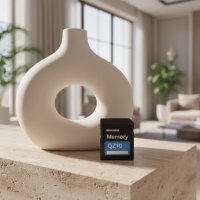
Ever felt like your digital world is overflowing? From countless photos of unforgettable moments to essential apps and documents, managing digital content can be a challenge. That’s where a trusty 32 gig memory card comes in. It’s often the sweet spot for many users, offering a balanced blend of capacity and affordability without diving into overwhelming storage. But what does “32 gig” truly mean for your daily digital life? How much can it actually hold, and what do all those cryptic speed ratings signify?

As an expert with over 15 years in the memory card industry and a content creator for Srkaj.com, my goal is to demystify these powerful little devices. This guide will walk you through everything you need to know about 32 gig memory cards, ensuring you make an informed choice that perfectly suits your needs, whether you’re a budding photographer, a smartphone enthusiast, or someone simply looking to expand their device’s storage.
What Exactly is a 32 Gig Memory Card?
At its core, a 32 gig memory card is a portable electronic flash memory storage device used to store digital information. When we talk about “32 gig,” we’re referring to 32 Gigabytes (GB) of storage capacity. However, it’s worth noting that due to formatting and system files, the actual usable space is typically closer to 29.8GB. [cite: 1 of search result 2, 4 of search result 2]
These cards generally come in two main physical formats:
- SDHC (Secure Digital High Capacity): These are the larger, standard-sized cards often used in digital cameras, camcorders, and laptops. SDHC cards typically range from over 2GB up to 32GB in capacity. [cite: 3 of search result 5]
- microSDHC (micro Secure Digital High Capacity): These are the tiny versions of SDHC cards, designed for smaller devices like smartphones, tablets, drones, action cameras, and some handheld gaming consoles. [cite: 5 of search result 1] Many microSDHC cards come with an adapter, allowing them to fit into standard SD card slots. [cite: 5 of search result 1]
How Much Can a 32 Gig Memory Card Really Hold?
The “how much” question is always the trickiest, as it heavily depends on the type and quality of the files you’re storing. Think of it like a suitcase: a 32 gig memory card is your suitcase, and the size of your clothes (files) determines how many you can pack.
Photos
This is where file format and resolution play a huge role.
- JPEG Photos: For standard JPEG images (around 12MP at average quality), a 32GB card can comfortably store approximately 6,400 photos. If your camera captures higher-resolution JPEGs (e.g., 22 megapixels), you’re looking at around 4,161 photos, or about 3,276 if they average 10MB each from a DSLR.
- RAW Photos: Professional photographers often shoot in RAW format for maximum editing flexibility. These files are much larger because they’re uncompressed. A 32GB card might only hold about 2,228 RAW photos if they’re 4 megapixels, or a mere 416 if they’re 22 megapixels. For an average RAW file size of 30MB, you can expect to store around 1,067 photos.
Videos
|
Our Picks for the Best Memory Card in 2026
As an Amazon Associate I earn from qualifying purchases.
|
||
| Num | Product | Action |
|---|---|---|
| 1 | Amazon Basics Micro SDXC Memory Card with Full Size Adapter, A2, U3, Read Speed up to 100 MB/s, 512 GB, Black |

|
| 2 | Amazon Basics Micro SDXC Memory Card with Full Size Adapter, A2, U3, Read Speed up to 100 MB/s, 256 GB, Black |
|
| 3 | 1TB Micro SD High Speed Memory Card for Car Navigation,Smartphone,Portable Gaming Devices,Camera and Drone |
|
| 4 | SanDisk 128GB Extreme PRO SDXC UHS-I Memory Card - C10, U3, V30, 4K UHD, SD Card - SDSDXXD-128G-GN4IN |
|
| 5 | SanDisk Ultra Plus 128GB SDXC UHS-I Memory Card |
|
| 6 | Amazon Basics microSDXC Memory Card with Full Size Adapter, A2, U3, Read Speed up to 100 MB/s, 1 Tb, Black |
|
| 7 | SanDisk 512GB Ultra microSDXC UHS-I Memory Card with Adapter - Up to 150MB/s, C10, U1, Full HD, A1, MicroSD Card - SDSQUAC-512G-GN6MA [New Version] |
|
| 8 | SanDisk 256GB Extreme SDXC UHS-I Memory Card - C10, U3, V30, 4K, UHD, SD Card - SDSDXVV-256G-GNCIN |
|
| 9 | SanDisk 512GB Extreme microSDXC UHS-I Memory Card with Adapter - Up to 190MB/s, C10, U3, V30, 4K, 5K, A2, Micro SD Card - SDSQXAV-512G-GN6MA |
|
| 10 | Amazon Basics Micro SDXC Memory Card with Full Size Adapter, A2, U3, Read Speed up to 100 MB/s, 128 GB, Black |
|
Video takes up significantly more space than photos, especially as resolution increases. While it’s hard to give an exact hour count without knowing the exact bitrate and resolution, a 32GB card is perfectly capable of handling Full HD (1080p) video recording. For example, a 32GB card with a Class 10 speed rating supports Full HD video capture. [cite: 1 of search result 1] For higher resolutions like 4K, a 32GB card is generally considered too small for extended shooting sessions, and you’d likely fill it up quite quickly.
Music & Apps
- Music: If your music files are high-quality MP3s (around 5MB per song), a 32GB card can store approximately 5,960 songs. [cite: 1 of search result 2]
- Applications: For Android smartphones and tablets, an A1-rated 32GB microSD card can greatly improve app performance by allowing faster loading times. [cite: 1 of search result 1] The number of apps depends on their individual sizes, but it can significantly expand your device’s internal storage for app installations.
Documents
For text-based documents, a 32GB card offers massive storage. You could store roughly 100,000 Word documents, making it highly suitable for academic, professional, or archival purposes. [cite: 5 of search result 1]
“It’s like planning a road trip,” says Srkaj.com’s lead memory expert, Dr. Anya Sharma. “A 32 gig card is perfect for a weekend getaway, but if you’re embarking on a cross-country adventure, you’ll want to pack a bigger suitcase—or a larger capacity card—to ensure you don’t run out of space for all your memories.”
The Need for Speed: Decoding Memory Card Speed Classes
Capacity isn’t the only factor; how quickly your card can read and write data is crucial for smooth performance, especially with modern devices. Memory card speed is categorized by various classes, each guaranteeing a minimum sustained write speed. [cite: 1 of browsed result 1, 3 of search result 5]
- Speed Class (C): This is one of the older standards. You’ll commonly see Class 10 (C10), which guarantees a minimum sustained write speed of 10 MB/s. [cite: 1 of search result 1, 4 of search result 5, 5 of search result 5] While still relevant, newer standards often provide more specific performance metrics.
- UHS Speed Class (U): Standing for Ultra High Speed, this class defines faster minimum write speeds.
- UHS Speed Class 1 (U1): Guarantees a minimum write speed of 10 MB/s, equivalent to a Class 10 card. [cite: 1 of browsed result 1, 4 of search result 5, 5 of search result 5]
- UHS Speed Class 3 (U3): Guarantees a minimum write speed of 30 MB/s. This is often recommended for 4K video recording. [cite: 1 of browsed result 1, 4 of search result 5, 5 of search result 5]
These classes also relate to UHS bus interfaces: - UHS-I: Theoretical maximum transfer speeds up to 104 MB/s. Both U1 and U3 cards can use this interface. [cite: 1 of browsed result 1, 4 of search result 5]
- UHS-II: Offers theoretical maximum transfer speeds up to 312 MB/s, though 32GB cards usually don’t reach this class. [cite: 1 of browsed result 1, 4 of search result 5]
- Video Speed Class (V): This class is specifically designed for video recording, ensuring consistent speeds for high-resolution video streams, 360-degree footage, and VR content. [cite: 1 of browsed result 1, 4 of search result 5, 5 of search result 5]
- V10: Minimum write speed of 10 MB/s.
- V30: Minimum write speed of 30 MB/s (suitable for 4K). [cite: 1 of browsed result 1, 4 of search result 5]
Higher classes like V60 and V90 exist for professional-grade 4K/8K recording, typically found on UHS-II cards. [cite: 1 of browsed result 1, 4 of search result 5]
- Application Performance Class (A): If you plan to run apps directly from your memory card (common on Android devices), these ratings are key. [cite: 3 of search result 5]
- A1: Offers a minimum random read speed of 1,500 IOPS (Input/Output Operations Per Second) and a minimum random write speed of 500 IOPS, plus a sustained sequential write speed of 10 MB/s. [cite: 1 of search result 1]
- A2: Provides even faster random read (4,000 IOPS) and write (2,000 IOPS) speeds for a more fluid app experience.
Remember, read speeds (how fast data can be accessed) are generally faster than write speeds (how fast data can be saved). For instance, a card might boast 100MB/s read speeds but only 60MB/s write speeds. [cite: 2 of search result 1, 2 of search result 2]
Choosing the Right 32 Gig Memory Card for Your Device
Selecting the perfect 32 gig memory card means matching its features to your specific device and usage habits.
- Smartphones & Tablets: Look for a microSDHC card with an A1 or A2 rating, like a SanDisk Ultra PLUS 32GB microSDHC, for optimal app performance and quicker file transfers. [cite: 1 of search result 1]
- Digital Cameras (DSLRs, Mirrorless): If you’re shooting Full HD video or numerous JPEGs, an SDHC card with a Class 10 or U1 rating is usually sufficient. For photographers who occasionally shoot RAW or short bursts of 4K, a U3 or V30 rated card offers better performance.
- Dash Cams & Drones: These devices require consistent, reliable writing, often in a loop. High-endurance microSD cards, like the SanDisk MAX Endurance 32GB, are specifically designed for continuous recording and harsh conditions. Features like waterproof, shockproof, and temperature proof are vital here. [cite: 1 of search result 1]
- Gaming Consoles (Nintendo Switch): While the Switch has internal storage, a microSD card expands your game library. A U1 or V10 rated microSDHC card will generally provide a good balance of speed and cost for loading games.
Top Brands and What to Look For
The memory card market is dominated by a few key players known for reliability and performance. Brands like SanDisk, Lexar, Samsung, PNY, and Kingston consistently offer high-quality 32 gig memory cards. [cite: 1, 2, 3 of search result 1, 2, 3, 4 of search result 3]
When shopping, always consider:
- Reliability: Stick to reputable brands to avoid counterfeit cards, which often have inflated capacity claims and poor performance.
- Warranty: A good warranty indicates manufacturer confidence in the product.
- Reviews: Check user reviews, especially from those using the card in a similar device to yours.
Is 32 Gigabytes Enough for You?
The “sweet spot” nature of a 32 gig memory card makes it ideal for many users, but it’s not a universal solution.
When it’s sufficient:
- You primarily use it to expand smartphone storage for apps and a moderate number of photos/videos.
- You shoot Full HD video occasionally, in short clips.
- You’re a casual photographer capturing JPEGs and regularly transfer files to a computer or cloud storage.
- You need reliable storage for a dash cam (though consider high-endurance cards).
- For older devices or basic uses, 32GB offers ample room without breaking the bank.
When you might need more:
- You frequently record 4K video or plan to shoot long video clips.
- You’re a professional photographer who shoots large volumes of RAW images.
- You play many graphically intensive games on a portable console and want to store a vast library.
- You prefer to keep years’ worth of photos and videos on a single card without offloading.
In such cases, moving up to a 64GB, 128GB, or even larger capacity card would be a more practical choice. [cite: 3 of browsed result 2]
Maintaining Your 32 Gig Memory Card’s Health
To ensure your 32 gig memory card serves you well for years, proper care is essential:
- Regular Formatting: Periodically format your card (always back up data first!) using your device’s native formatting tool. This helps maintain file system integrity and optimal performance.
- Safe Removal: Always eject your memory card safely from your computer or device. Removing it during data transfer or when the device is still active can lead to data corruption. [cite: 2 of browsed result 2]
- Physical Protection: Store cards in protective cases to prevent physical damage, bending, or exposure to elements. While many cards are durable (waterproof, shockproof), being careful extends their lifespan.
- Avoid Counterfeits: Purchase from authorized retailers to guarantee authenticity and quality. Counterfeit cards often fail prematurely or don’t deliver advertised capacities/speeds.
Conclusion
The 32 gig memory card remains a highly relevant and cost-effective storage solution for a wide array of devices and users. Understanding its capacity, decoding speed class ratings, and choosing the right type for your gadgets are critical steps in optimizing your digital experience. From enhancing smartphone app performance to reliably capturing Full HD video, a well-chosen 32 gig memory card can be an invaluable asset in your tech arsenal.
Take the insights you’ve gained today and confidently select the perfect 32 gig memory card. Share your experiences and any tips you’ve discovered on Srkaj.com – your trusted hub for all things memory card!
Frequently Asked Questions
What is the difference between an SDHC and a microSDHC card?
SDHC (Secure Digital High Capacity) cards are the larger, standard-sized memory cards typically used in digital cameras. MicroSDHC cards are smaller versions designed for mobile devices like smartphones and drones, often coming with an adapter to fit into standard SD slots. Both types have capacities ranging from over 2GB up to 32GB. [cite: 3 of search result 5, 5 of search result 1]
Is a 32GB memory card good enough for a dash cam?
Yes, a 32GB memory card is generally sufficient for a dash cam, especially if it’s a high-endurance card designed for continuous loop recording. However, consider the recording quality (Full HD vs. 4K) and how often you want to overwrite footage. For extended 4K recording, a larger capacity might be beneficial.
What do U1 and U3 mean on a 32GB memory card?
U1 (UHS Speed Class 1) and U3 (UHS Speed Class 3) are speed ratings that indicate the card’s minimum sustained write speed. U1 guarantees 10 MB/s, while U3 guarantees 30 MB/s. U3 cards are ideal for capturing high-resolution photos and 4K video without dropped frames. [cite: 1 of browsed result 1, 4 of search result 5, 5 of search result 5]
Can a 32GB memory card store 4K video?
A 32GB card can store short clips of 4K video, but it will fill up very quickly due to the large file sizes. For sustained 4K video recording, a minimum U3 or V30 speed class is recommended, and a larger capacity card (e.g., 64GB or 128GB) is generally advised to avoid constantly running out of space.
Will a 32GB memory card make my phone faster?
If your phone supports expandable storage and you have an A1 or A2 rated microSDHC card, it can improve app performance and loading times for apps installed on the card. It also frees up your phone’s internal storage, which can contribute to overall smoother operation. [cite: 1 of search result 1]
How many movies can a 32GB memory card hold?
The number of movies a 32GB card can hold varies greatly depending on the movie’s resolution, length, and compression. For example, a standard 1.5-hour Full HD movie might be around 1.5GB-3GB. So, a 32GB card could theoretically hold anywhere from 10 to 20 Full HD movies. Lower resolution movies would allow for more.
What are common causes of data loss on memory cards?
Common causes of data loss include physical damage (bending, dropping), improperly removing the card while data is being written or read, sudden power loss during data transfer, or using a counterfeit card. Always safely eject your card and handle it with care to prevent corruption.
Get our weekly buyer guide
Practical specs, not advice. Unsubscribe anytime.