Welcome, fellow digital storage enthusiasts! As someone who’s spent over 15 years knee-deep in the fascinating world of memory cards, I’ve seen formats come and go, and few spark as much curiosity (and sometimes confusion) as the M2 Memory Card. If you’ve stumbled upon this term, perhaps you’re dusting off an old device or simply wondering about the vast history of digital storage. Let’s clear the air and take a deep dive into what makes the M2 memory card unique, its place in history, and what it means for you today.
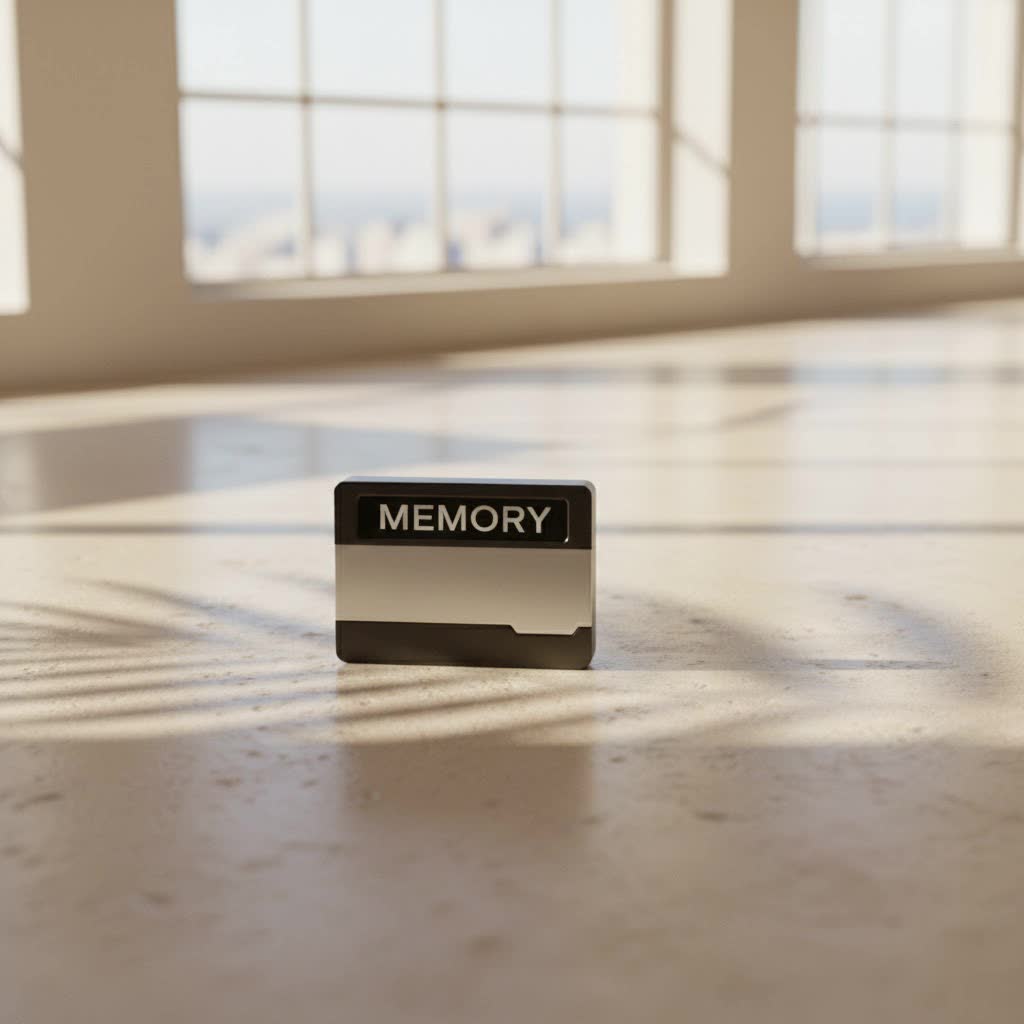
You see, the term “M2 memory card” often refers to something quite specific: the Memory Stick Micro (M2). This wasn’t just any compact storage solution; it was a proprietary format developed by Sony, making its debut in 2006. It was designed primarily for Sony Ericsson’s increasingly slim mobile phones, at a time when miniaturization was the name of the game for portable electronics. Unlike the ubiquitous microSD cards we know today, the M2 memory card had a distinct mission and a relatively short-lived prime.
What Exactly is an M2 Memory Card?
|
Our Picks for the Best Memory Card in 2026
As an Amazon Associate I earn from qualifying purchases.
|
||
| Num | Product | Action |
|---|---|---|
| 1 | SanDisk 128GB Extreme PRO SDXC UHS-I Memory Card - C10, U3, V30, 4K UHD, SD Card - SDSDXXD-128G-GN4IN |

|
| 2 | SanDisk 512GB Ultra microSDXC UHS-I Memory Card with Adapter - Up to 150MB/s, C10, U1, Full HD, A1, MicroSD Card - SDSQUAC-512G-GN6MA [New Version] |
|
| 3 | Amazon Basics Micro SDXC Memory Card with Full Size Adapter, A2, U3, Read Speed up to 100 MB/s, 256 GB, Black |
|
| 4 | Amazon Basics microSDXC Memory Card with Full Size Adapter, A2, U3, Read Speed up to 100 MB/s, 1 Tb, Black |
|
| 5 | Amazon Basics Micro SDXC Memory Card with Full Size Adapter, A2, U3, Read Speed up to 100 MB/s, 512 GB, Black |
|
| 6 | SanDisk Ultra Plus 128GB SDXC UHS-I Memory Card |
|
| 7 | SanDisk 256GB Extreme SDXC UHS-I Memory Card - C10, U3, V30, 4K, UHD, SD Card - SDSDXVV-256G-GNCIN |
|
| 8 | SanDisk 512GB Extreme microSDXC UHS-I Memory Card with Adapter - Up to 190MB/s, C10, U3, V30, 4K, 5K, A2, Micro SD Card - SDSQXAV-512G-GN6MA |
|
| 9 | 1TB Micro SD High Speed Memory Card for Car Navigation,Smartphone,Portable Gaming Devices,Camera and Drone |
|
| 10 | Amazon Basics Micro SDXC Memory Card with Full Size Adapter, A2, U3, Read Speed up to 100 MB/s, 128 GB, Black |
|
Imagine a memory card smaller than a postage stamp, yet robust enough to hold your precious photos, music, and videos from the mid-2000s. That’s essentially what the Memory Stick Micro (M2) was. Born from Sony’s ambition to create a unified memory card ecosystem across its various devices, the M2 was the ultra-compact sibling to the larger Memory Stick PRO Duo.
Its design was sleek and diminutive, measuring just 15 mm long, 12.5 mm wide, and 1.2 mm thick. This tiny footprint was revolutionary for its time, perfectly suiting the sleek flip phones and candy bar designs of Sony Ericsson. It offered a significant upgrade from the internal storage typically found in those phones, allowing users to expand their digital lives without compromise. If you owned a Sony Ericsson Walkman phone or a Cybershot camera from that era, chances are you were quite familiar with this compact wonder.
Key Specifications: Speed, Capacity, and Compatibility
When the M2 memory card first arrived, its specifications were quite competitive, though they quickly became outpaced by the rapidly evolving memory landscape.
- Capacities: Initially, M2 cards were available in smaller capacities like 64MB, 128MB, 256MB, and 512MB. As technology progressed, higher capacities emerged, with 1GB, 2GB, 4GB, 8GB, and even up to 16GB M2 memory cards being produced. However, cards larger than 4GB were less common and harder to find even during their heyday.
- Speed: While exact speed ratings varied by manufacturer, the M2 memory card generally offered respectable read and write speeds for its time, adequate for recording standard definition video and storing MP3s. It wasn’t designed for blazing-fast transfers by today’s standards, but it perfectly served the needs of the devices it supported.
- Compatibility: This is where the M2’s proprietary nature truly showed. M2 cards were predominantly compatible with Sony Ericsson mobile phones and a handful of Sony’s other portable devices. You’d often find M2 cards bundled with an M2 to Memory Stick PRO Duo adapter, allowing them to be used in devices that supported the larger Memory Stick PRO Duo format, like certain PlayStation Portable models or older Sony digital cameras. This adapter was a clever way to bridge the compatibility gap within Sony’s own ecosystem.
M2 vs. The World: Why Did it Fade?
The story of the M2 memory card is a classic tale of proprietary technology meeting the unforgiving forces of market standardization. Its decline wasn’t due to a lack of quality, but rather strategic decisions and the rise of a universally adopted competitor: the microSD card.
What were the main reasons for its decline?
The primary factor was its proprietary nature. While Sony tried to push its Memory Stick format, other manufacturers widely adopted the open-standard microSD card. This meant that microSD cards were produced by a multitude of companies, leading to greater competition, lower prices, and wider availability. The microSD card quickly became the default choice for virtually all non-Sony mobile phones, cameras, and other portable gadgets.
“While the M2 memory card served its purpose admirably for Sony’s ecosystem, the sheer momentum of the open-standard microSD format proved too powerful,” notes industry veteran and digital storage analyst, Alex Thompson. “The proprietary model, especially in high-volume consumer electronics like mobile phones, rarely wins out in the long run.”
By 2010, Sony itself began to shift away from its proprietary Memory Stick formats in favor of microSD and SD cards, signaling the end of an era for the M2. The advantages of universal compatibility, lower manufacturing costs, and widespread consumer acceptance made microSD the undeniable victor in the battle of compact memory card formats.
Finding and Using M2 Cards Today
If you’ve got an old Sony Ericsson device that requires an M2 memory card, you might find yourself on a treasure hunt. Since new M2 cards are no longer in production, your options are limited to the secondary market.
Where can you source M2 cards today?
You’ll typically find them on online marketplaces like eBay, specialized vintage electronics shops, or sometimes even in old electronics bins at thrift stores. When purchasing, be sure to check the seller’s reputation and carefully inspect product descriptions. Many M2 cards available today are either used or new-old-stock (NOS), meaning they were manufactured years ago but never sold.
What about data recovery from old M2 cards?
If you have an M2 memory card filled with cherished memories, you’ll need a compatible card reader. Look for multi-card readers that specifically mention Memory Stick Micro (M2) support, or try to find a Memory Stick PRO Duo adapter and a standard Memory Stick PRO Duo reader. Data recovery software can often help retrieve files from formatted or corrupted cards, but always ensure the card itself is physically recognized by your computer first.
Practical advice for existing M2 users:
If your device still works and relies on an M2 memory card, handle it with care. These cards are irreplaceable in terms of new supply. Back up your data regularly to a more modern storage solution. If you’re looking to upgrade an old device, unfortunately, there isn’t a direct “upgrade” path for the M2 memory card; you’d typically need to find another M2 card of higher capacity, which, as discussed, can be challenging.
Expert Insight: A Glimpse Back at Proprietary Formats
As an expert who has witnessed the evolution of memory cards firsthand, the M2 memory card serves as a powerful reminder of how technology markets evolve. It’s a testament to innovation, even if that innovation ultimately yielded to industry standardization. Understanding formats like the M2 helps us appreciate the convenience of today’s universal standards. The lessons learned from the M2’s journey contributed to the widely adopted, interoperable memory card solutions we enjoy today.
Frequently Asked Questions About M2 Memory Cards
Q1: What is the main difference between an M2 memory card and a microSD card?
A1: The M2 memory card (Memory Stick Micro) was a proprietary format developed by Sony, mainly for Sony Ericsson phones. The microSD card is an open standard, universally adopted by almost all other device manufacturers, leading to wider availability and lower costs. They also have different physical dimensions and pin layouts.
Q2: Can I use an M2 memory card in a modern phone or camera?
A2: No, M2 memory cards are generally not compatible with modern phones or cameras. Modern devices almost exclusively use microSD or SD card formats. You would need a device specifically designed to accept the M2 format.
Q3: What was the maximum capacity of an M2 memory card?
A3: While M2 cards were theoretically capable of reaching 16GB, capacities up to 4GB were far more common and widely available during their peak. Finding higher capacity M2 cards today is quite rare.
Q4: Are M2 memory cards still manufactured?
A4: No, M2 memory cards are no longer actively manufactured by Sony or third-party companies. Any M2 cards you find for sale today are typically old stock or used items.
Q5: How can I transfer photos from an old M2 memory card to my computer?
A5: To transfer photos, you’ll need an M2 compatible card reader or a multi-card reader that specifically supports the Memory Stick Micro (M2) format. Alternatively, if your old device still works, you might be able to transfer files via a USB connection.
Q6: Is an M2 memory card the same as an M.2 SSD?
A6: Absolutely not. This is a common point of confusion due to similar naming. The M2 memory card is a tiny, proprietary flash memory card from the mid-2000s. An M.2 SSD (Solid State Drive) is a modern, high-performance storage device used internally in laptops and desktops, providing much faster speeds and significantly larger capacities. They are entirely different technologies for different purposes.
Conclusion
The m2 memory card, or Memory Stick Micro, holds a special place in the annals of digital storage history. It represents a period of intense innovation and proprietary competition, ultimately paving the way for the universally compatible and incredibly versatile memory solutions we use today. While largely obsolete, it’s a testament to the continuous evolution of technology. If you’re still using an M2 card, cherish it as a piece of tech history, back up your data diligently, and remember that even the smallest components have a big story to tell. Here at Srkaj.com, we believe that understanding these intricate details helps us all become more confident and effective users of technology, old and new. Keep exploring, keep learning, and keep your precious memories safe!
